Con-Lang
Guides to constructed and auxiliary languages — from century-old internationalist projects to fictional alien tongues.
 Darnassian
Darnassian (also seen as Darnassae, or simply kaldorei or 'elvish' in older sources) is the language of the night elves of World of Warcraft — the kaldorei, 'children of the stars'. It is the ancestral tongue of Warcraft's entire elven family: the naga's Nazja, the high and blood elves' Thalassian, and the nightborne's Shalassian all descend from it, the way the Romance languages descend from Latin. In the lore this pedigree is politically loaded: the night elves regard comparisons between their speech and their estranged kin's languages as offensive, and a careful speaker (or role-player) keeps the four languages apart. [Lore and family tree: High confidence — Blizzard-published material via the Warcraft wikis.]
Elefen (Lingua Franca Nova) Elefen (Lingua Franca Nova)
Lingua Franca Nova — abbreviated LFN and known colloquially as Elefen (a spelling-out of the letters L-F-N) — is a constructed international auxiliary language. Its vocabulary is drawn primarily from the Romance languages (French, Italian, Portuguese, Spanish and Catalan), and its grammar is modelled on Romance-based creoles, giving it a deliberately simple, largely uninflected structure.[^1][^4]
Esperanto Esperanto
Esperanto is the world's most widely spoken constructed international auxiliary language. It was created by L. L. Zamenhof , a Polish ophthalmologist, and first published in 1887 under the pseudonym Doktoro Esperanto — "one who hopes". The language was designed to be politically neutral, easy to learn, and capable of serving as a common second language for international communication.
Folksprak Folksprak
Folksprak (also spelled Folkspraak) is a project to build an inter-Germanic ‘zonal’ auxiliary language: a planned language meant to be understood, more or less on sight, by speakers of any Germanic language — English, German, Dutch, the Scandinavian languages, Afrikaans, Yiddish and the rest — without their ever having studied it.[^1]
Glosa Glosa
GlosaGlosa is a constructed international auxiliary language whose stated purpose is communication between people with different first languages — explicitly not the replacement of those languages.[^1]
Ido Ido
IdoIdo is a constructed international auxiliary language created as a deliberate reform of Esperanto. Its name means simply "offspring" in Esperanto — an acknowledgment that it grew directly from L. L. Zamenhof's 1887 language, retaining its logical backbone while addressing perceived weaknesses.
Interlingua Interlingua
Interlingua is a naturalistic international auxiliary language developed between 1937 and 1951 by the International Auxiliary Language Association (IALA) , chiefly under the direction of the linguist Alexander Gode . Unlike invented languages built from scratch, Interlingua was extracted from natural languages: its vocabulary comes from the common international stock shared by English, French, Italian, Spanish, and Portuguese, and its grammar is the simplest system that governs that vocabulary without distorting it.[^1]
Interslavic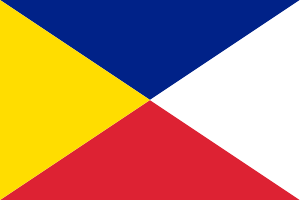 Interslavic
Interslavic ( Medžuslovjansky in its own Latin script, Меджусловјанскы in Cyrillic) is a naturalistic zonal auxiliary language designed to be comprehensible to speakers of any Slavic language without prior study. Unlike purely artistic constructed languages, Interslavic is grounded entirely in the common Slavic heritage: its vocabulary, grammar, and phonology are derived statistically and historically from the real Slavic languages rather than invented from scratch.
Ithkuil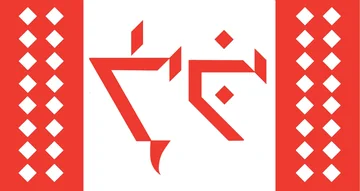 Ithkuil
Ithkuil is a constructed "philosophical" or "engineered" language created by the American linguist John Quijada. First published online in 2004, it is famous for one audacious goal: to express extremely precise, nuanced meaning with the greatest possible economy of speech, while reducing the vagueness and ambiguity that natural languages tolerate. A single short Ithkuil word can carry information that English would need a whole sentence — or paragraph — to convey.
Khuzdul (Dwarvish)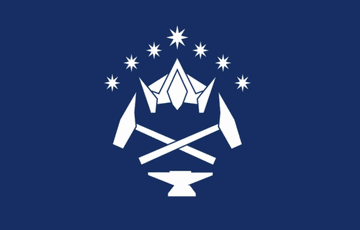 Khuzdul (Dwarvish)
Khuzdul is the secret language of the Dwarves in J.R.R. Tolkien's Middle-earth, heard in The Lord of the Rings and The Hobbit and glimpsed across his wider writings. Within the legendarium it was devised not by the Dwarves themselves but by their maker, the Vala Aulë — whom the Dwarves call Mahal — and taught to the Seven Fathers of the Dwarves at their awakening. Because it was a made language given whole, the Dwarves guarded it as a treasure: they almost never spoke it before outsiders, took public 'outer' names from the languages of Men (Gimli, Balin and Thorin are Old Norse names), and kept their true Khuzdul names so private that they did not even inscribe them on their tombs.
Klingon (tlhIngan Hol) Klingon (tlhIngan Hol)
Klingon — known in the language itself as tlhIngan Hol ("the Klingon language") — is a constructed language created by American linguist Marc Okrand for the Klingon alien species of the Star Trek franchise. It is one of the most fully developed and widely studied constructed languages ever created for a fictional setting. [^1] [^3]
Lojban Lojban
Lojban (la .lojban.) is a constructed language of the logical or engineered type. Its grammar is built on rules derived from predicate logic, and it is designed to be syntactically unambiguous and machine-parsable: a well-formed sentence has exactly one grammatical structure.[^1][^4] It is not a naturalistic language and was not designed to imitate any existing one.[^1]
Novial Novial
Novial is a constructed international auxiliary language created by the Danish linguist Otto Jespersen (1860–1943), one of the most eminent grammarians and phonologists of his era. He introduced Novial in his 1928 book An International Language , presenting it as a reform and improvement upon Ido — itself a reform of Esperanto. The name "Novial" is a blend of Nov (new) + I nternational + Al ternative (or Auxiliari Lingue ), though Jespersen himself sometimes glossed it simply as "new international auxiliary language".
Occidental (Interlingue) Occidental (Interlingue)
Occidental — officially renamed Interlingue in 1949, with «Interlingue (Occidental)» also permitted — is an international auxiliary language announced in 1922 by Edgar de Wahl, a Baltic German naval officer and teacher from Tallinn, Estonia. De Wahl's goal was a language with maximal grammatical regularity and a natural look: vocabulary drawn from existing Western European (chiefly Romance) words, derived with recognized prefixes and suffixes rather than invented ones. The result reads at first sight to anyone acquainted with a Romance language.[^1]
Quenya (High-Elven) Quenya (High-Elven)
Quenya is the most fully developed of the Elvish languages invented by J.R.R. Tolkien, the philologist and author of The Lord of the Rings. Within his legendarium it is the ancient, ceremonial High-Elven tongue — the "Latin of the Elves" — used for lore, song and formal occasions in the Third Age while everyday Elvish speech used Sindarin. Tolkien began developing it around 1910–1915, drawing heavily on the sound and structure of Finnish, with further influence from Latin and Ancient Greek.
Romulan (Rihannsu) Romulan (Rihannsu)
Romulan is the language of the Romulan Star Empire in the Star Trek universe — the tongue of Romulus (in the language itself, ch'Rihan) and Remus (ch'Havran). Unlike Klingon, which Marc Okrand built into a complete, officially published language, Romulan was never given a canonical grammar by the franchise. What exists instead is a three-layer tradition: scattered words and phrases from the television series and films; a substantial linguistic sketch created by author Diane Duane for her Rihannsu novels (beginning with My Enemy, My Ally, 1984); and decades of fan expansion that grew Duane's sketch into a usable language, often called Rihan. This guide teaches all three layers and labels each one.
Sambahsa Sambahsa
Sambahsa, or Sambahsa-Mundialect, is an international auxiliary language (IAL) devised by the French linguist Olivier Simon. Its name is built from two of its own words: sam 'same' and bahsa 'language'; Mundialect blends mundial 'worldwide' with dialect.[^1]
Sindarin (Grey-Elven) Sindarin (Grey-Elven)
Sindarin is the everyday Elvish language of The Lord of the Rings — the tongue most Elves of Middle-earth actually spoke in the Third Age, while Quenya survived mainly as a language of lore and ceremony. J.R.R. Tolkien modelled its sound and especially its grammar on Welsh, which he loved from childhood, giving it soft consonants, frequent sound-changes and a very different feel from the Finnish-flavoured Quenya.
Thalassian Thalassian
Thalassian is the language of the blood elves (sin'dorei), high elves (quel'dorei) and void elves (ren'dorei) in World of Warcraft and the wider Warcraft franchise. In the lore it descends from Darnassian, the tongue of the night elves: when the Highborne were exiled from Kalimdor after the War of the Ancients and founded the kingdom of Quel'Thalas ('High Home') in the north of the Eastern Kingdoms, their speech drifted over millennia into a distinct language. Blizzard's own Warcraft Encyclopedia notes that calling a modern blood elf by a Darnassian term is somewhere between offensive and foolish — the two peoples parted on the worst of terms, and the languages carry that history. [Lore: High confidence — Blizzard-published material via the Warcraft wikis.]
Toki Pona Toki Pona
Toki Pona — the autonym means 'good language' or 'simple language' — is a constructed language of the philosophical or minimalist type. Unlike Esperanto or Interslavic, it was not designed as an international auxiliary language for broad practical communication. Its stated aim is to simplify thought and push attention toward the basic elements of experience.[^1]
Vulcan (Golic Vulcan) Vulcan (Golic Vulcan)
Vulcan is the language of the Vulcans, the logical, pointed-eared civilisation of Star Trek best embodied by Mr. Spock. Unlike Klingon — which was given a complete, systematic grammar by linguist Marc Okrand — Vulcan was never fully codified in any single official publication. It exists today in two overlapping layers: a small body of on-screen 'canon' words and phrases from the television and film productions, and a much larger fan-built language called Golic Vulcan, developed chiefly through the Vulcan Language Institute (VLI) in the 1990s and its successor communities.
What is a Conlang? What is a Conlang?
A constructed language — conlang for short — is a language whose phonology, grammar and vocabulary were consciously devised by a person or group, rather than having evolved naturally over generations of speakers. Where French is the accumulated result of two thousand years of Latin drifting through millions of mouths, Esperanto is the deliberate design of one ophthalmologist, L. L. Zamenhof, published as a complete system in 1887. Design, not descent, is the defining trait.