Endangered Languages
Guides to spoken languages on the brink — tongues with only a handful of fluent speakers left, yet documented well enough to learn. Each guide is organised into the eight CEFR sub-levels (A1.1 to B2.2) and points to verified, citable resources, so that even a critically endangered language can be studied carefully and respectfully.
 Ainu (Aynu itak)
Fewer than ~10 elderly fluent or semi-speakers; the Endangered Languages Project records ~2 native speakers
Ainu (Aynu itak, literally 'the language of the Ainu / of humans') is the Indigenous language of the Ainu people of Hokkaido, the southern Kuril Islands and, historically, southern Sakhalin. It is a language isolate: no genetic relationship to Japanese, or to any other language, has ever been demonstrated, so the resemblances Ainu shares with its neighbours are the result of contact, not common descent.[^1]
Breton (Brezhoneg)~107,000 (2024 est.) to ~207,000 (2018 survey); UNESCO cites ~250,000; speakers are mostly elderly
Breton (Brezhoneg) is an Insular Celtic language of the Southwestern Brittonic group — the only Celtic language whose homeland is on the European mainland. It is a very close relative of Cornish and a cousin of Welsh, brought to the Armorican peninsula (modern Brittany / Breizh, in north-west France) by migrants from Britain in the early medieval period. It is spoken chiefly in western (Lower) Brittany.[^1][^2]
Cornish (Kernewek)A revived language: ~500 fluent speakers and ~2,000 conversational (estimates vary)
Cornish (Kernewek) is an Insular Celtic language of the Southwestern Brittonic group, making it a very close relative of Breton and a cousin of Welsh. It is the heritage language of Cornwall (Kernow) in the far south-west of Britain. Cornish is unusual among the languages in this hub because it is a revived language: its last traditional first-language speakers died out around the late 18th to 19th century, and the language used today is the product of a deliberate, scholarly revival begun in the early 20th century.[^1][^2]
Dalmatian (Vegliote / Viklasun)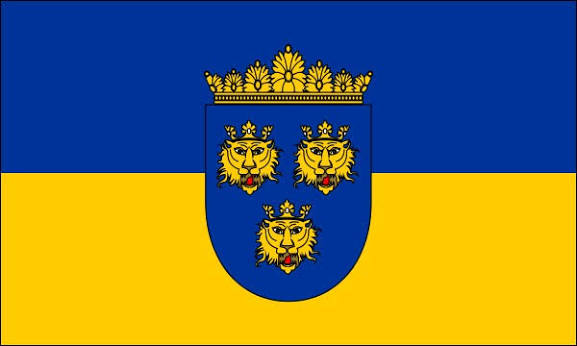 Dalmatian (Vegliote / Viklasun)
None. The last fluent speaker of Vegliote, Tuone Udaina, died on 10 June 1898.
Dalmatian was a Romance language — descended, like Italian, Spanish and Romanian, from spoken Latin — used along the eastern Adriatic seaboard in what is now Croatia and as far south as Kotor in Montenegro. It is extinct.[^1]
Gothic (𐌲𐌿𐍄𐌹𐍃𐌺 / gutiska razda) Gothic (𐌲𐌿𐍄𐌹𐍃𐌺 / gutiska razda)
None. The last speech communities in Crimea are attested into the second half of the 18th century; no native speaker has existed since.
Gothic is an extinct East Germanic language, and the only member of that branch to survive in a text corpus of any real size. Everything else in East Germanic — Vandalic, Burgundian — is known from scattered names and single words. This makes Gothic disproportionately important: it is the oldest substantially attested Germanic language, and much of what historical linguists can say about Proto-Germanic rests on it.[^1]
Ket (Yenisei Ostyak)Fewer than ~30 fluent speakers, nearly all elderly (down from 1,225 in the 1926 census)
Ket is the last living member of the Yeniseian language family, spoken by the Ket people along the middle Yenisei River and its tributaries in the Turukhansky District of Krasnoyarsk Krai, central Siberia. Its sister languages — Yugh, Kott, Arin, Assan and Pumpokol — are all extinct, the last of them (Yugh) lingering into the late twentieth century. Ket therefore carries an entire branch of human language on its own.[^1][^3]
Livonian (Līvõ kēļ)About 20 fluent (B1+) speakers and ~200 learners; last native speaker died in 2013
Livonian (Līvõ kēļ) is a Finnic language of the Uralic family — a close cousin of Estonian and a more distant relative of Finnish. For centuries it was the language of fishing communities along the Livonian Coast of Courland in present-day Latvia, a string of villages facing the Baltic Sea. Though the Livonians gave their name to the historical region of Livonia, the people of Latvian and German speech long ago became the majority, and Livonian retreated to the coast.[^1]
Manchu (Manju gisun)Fewer than ~100 fluent speakers; only ~9 mother-tongue speakers remain in Sanjiazi
Manchu (autonym Manju gisun) is a Tungusic language of northeast Asia and the heritage language of the Manchu people. For nearly three centuries it was anything but obscure: it was the court and administrative language of the Qing dynasty (1636–1912), the empire that ruled China and inner Asia. Millions of pages of Qing memorials, treaties, dictionaries and translations survive in Manchu, making it one of the best-documented languages on this list — and a key that historians still use to read the Qing archive.[^1]
Northern Sámi (davvisámegiella)About 20,000–25,000 speakers across northern Norway, Sweden and Finland
Northern Sámi (davvisámegiella, or simply sámegiella) is a Uralic language of the Finno-Ugric branch and the largest member of the Sámi language family — it accounts for roughly nine in ten Sámi speakers. It is spoken by the Indigenous Sámi people across the north of three countries: Norway, Sweden and Finland (the cultural region often called Sápmi or Lapland). It is a close relative of the other Sámi languages and a more distant cousin of Finnish and Estonian.[^1]
Scottish Gaelic (Gàidhlig)69,701 speakers in Scotland (2022 census); ~130,000 with some skills; 3,551 main language
Scottish Gaelic (Gàidhlig) is an Insular Celtic language of the Goidelic branch, descended from Old Irish and a close sister of Irish and Manx. It is spoken in Scotland (Alba), historically across the Highlands and now most strongly in the Outer Hebrides (the islands of Lewis, Harris, the Uists and Barra). It should not be confused with Scots, a Germanic relative of English.[^1][^2]
Tlingit (Lingít)~100–200 first-language speakers (2019), the youngest already over 60; ~100+ active learners
Tlingit (autonym Lingít, 'human/of the people') is a Na-Dene language of the Pacific Northwest Coast, spoken by the Tlingit people across the islands and inlets of southeastern Alaska from Yakutat to Ketchikan, and inland into northern British Columbia and the southern Yukon. Within Na-Dene it is a distinct branch, related more distantly to the large Athabaskan family (Navajo, Dene, Apache) and to Eyak.[^1]
Welsh (Cymraeg)About 538,000 speakers in Wales (2021 census, 17.8%); ~750,000+ with some ability
Welsh (Cymraeg) is an Insular Celtic language of the Brittonic branch, making it a close relative of Cornish and Breton and a more distant cousin of Irish and Scottish Gaelic (the Goidelic branch). It is spoken chiefly in Wales (Cymru), a constituent country of the United Kingdom, with smaller communities elsewhere, including the historic Welsh-speaking settlement of Y Wladfa in Patagonia, Argentina.[^1][^2]
Wymysorys (Wymysiöeryś)Fewer than ~20 native speakers, almost all elderly, plus new revival learners in Wilamowice
Wymysorys (native Wymysiöeryś), also called Vilamovian, is a West Germanic language spoken in a single town: Wilamowice (Wymysoü) in southern Poland, near the border of Silesia and Lesser Poland. Most scholars trace it to twelfth- and thirteenth-century Middle High German, carried east by settlers said to have come from Flanders, Friesland and Holland, and then reshaped by eight centuries beside Polish. The result is a Germanic language that a German speaker cannot simply understand.[^1]
Yuchi / Euchee (Tsohaya)No first-language speakers since 2021; ~12 second-language speakers (2016) and a community immersion programme
Yuchi — also spelled Euchee, and called Tsohaya by its own speakers — is the language of the Yuchi people, who today live in east-central Oklahoma within the Muscogee (Creek) Nation's jurisdictional area. Before forced removal on the Trail of Tears in the 1830s, the Yuchi lived in the southeastern United States (eastern Tennessee, the western Carolinas, northern Georgia and Alabama). Yuchi is a language isolate: although linguists from Sapir onward have proposed a distant link to the Siouan family, no relationship has been established, and the language stands alone.[^1]
Yurok (Puliklah)About half a dozen elderly first-language speakers; growing L2 learners via the Yurok Language Project
Yurok is an Algic language of the far northwest of California, traditionally spoken along the lower Klamath River and the Pacific coast of present-day Humboldt and Del Norte counties. Its family relationships are remarkable: Yurok and its neighbour Wiyot are the only Algic languages spoken outside the Algonquian heartland of central and eastern North America, making Yurok a distant western cousin of languages like Cree, Ojibwe and Cheyenne.[^1]