Ancient Languages
Guides to ancient and historical languages — from Classical Latin and Ancient Greek to Old English and Sumerian. These are orientation guides: they cover history, writing systems, core grammar and beginner vocabulary, and are honest about how much can be learned and where the reliable sources are. Because these languages have no living native-speaker community, learning goals are reading and understanding rather than everyday conversation.
 Ancient Assyrian (Akkadian)
“Ancient Assyrian” refers to the Assyrian dialect of Akkadian, the East Semitic language of ancient Assyria and Babylonia, written in cuneiform. Akkadian is attested from around 2500 BCE and was the great international language of the ancient Near East.[^1]
Ancient Chinese (Classical) Ancient Chinese (Classical)
This guide covers Classical (Literary) Chinese, 文言文 (wényánwén) — the written literary language of the Chinese classics, from Confucius (c. 500 BCE) through two millennia of literature, philosophy and government, up to the early 20th century.[^1]
Ancient Egyptian Ancient Egyptian
Ancient Egyptian is an Afro-Asiatic language with one of the longest recorded histories of any language — attested from around 3000 BCE and surviving, in its final stage Coptic, into the early modern period as a liturgical language.[^1]
Ancient Greek Ancient Greek
Ancient Greek (Ἑλληνική, hē Hellēnikḗ) is the Indo-European language of ancient Greece and the Hellenic branch's oldest well-attested member. It is the language of Homer, of Athenian drama and philosophy, of the historians, and of the Greek New Testament — a literature that shaped Western thought.[^1]
Classic Maya (Mayan family) Classic Maya (Mayan family)
“Mayan” is not a single language but a family of about thirty languages spoken across southern Mexico, Guatemala, Belize and Honduras. The script of the ancient Maya — the famous hieroglyphs of the Classic period (c. 250–900 CE) — records mainly a prestige language related to the Ch'olan branch, sometimes called Classic Maya or Classic Ch'olti'an.[^1]
Classical Nahuatl (Aztec) Classical Nahuatl (Aztec)
The language of the Aztecs (Mexica) is Nahuatl, a Uto-Aztecan language. “Classical Nahuatl” is the form of the language spoken in the Valley of Mexico around the time of the Spanish conquest (16th century) and richly documented just after it.[^1]
Classical Quechua (Inca) Classical Quechua (Inca)
The language of the Inca Empire was Quechua (Runasimi, “the people's mouth”), specifically the southern lineage from which Cusco Quechua descends. “Classical Quechua” usually means the colonial-era documented form.[^1]
Gothic for English speakers Gothic for English speakers
Gothic is the oldest Germanic language attested in quantity, and the only East Germanic language with a text corpus of real size — its sister languages Vandalic and Burgundian survive only in names and stray words.[^1] If you speak English, Gothic is the closest thing available to a direct written record of what your language's ancestor looked like roughly sixteen centuries ago.
Latin Latin
LatinLatin (lingua Latīna) is an Indo-European language of the Italic branch, originally the language of the city of Rome and the region of Latium in central Italy. As Rome expanded, Latin became the administrative and literary language of the Roman Republic and Empire across the Mediterranean and much of Europe.[^1]
Middle English Middle English
Middle English is the English of roughly 1150–1500, the stage between Old English and Early Modern English. Its most famous voice is Geoffrey Chaucer, author of The Canterbury Tales.[^1]
Middle High German Middle High German
Middle High German (Mittelhochdeutsch) is the High German of roughly 1050–1350 — the language of the courtly epic Nibelungenlied and of the Minnesang love poetry of Walther von der Vogelweide, Wolfram von Eschenbach and Hartmann von Aue.[^1]
Old Church SlavonicOld Church Slavonic (OCS) is the first literary and liturgical language of the Slavs — the oldest Slavic language written down, and still the ancestor-form of the Church Slavonic used in Orthodox worship today. In its own texts it is simply called словѣньскъ ѩзꙑкъ (slověnĭskŭ językŭ), 'the Slavic language'.[^1]
Old EnglishOld English (Englisc), also called Anglo-Saxon, is the earliest recorded form of the English language: a West Germanic language spoken in England from roughly the 5th to the mid-12th century. It is the language of the epic Beowulf and of King Alfred's translations.[^1]
Old High German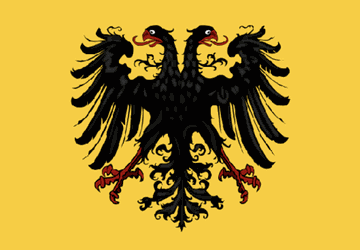 Old High German
Old High German (Althochdeutsch) is the earliest attested stage of the High German dialects, roughly 750–1050 CE. It is defined by the High German consonant shift that separates it from the other West Germanic languages.[^1]
Proto-GermanicProto-Germanic is the reconstructed common ancestor of all the Germanic languages — English, German, Dutch, the Scandinavian languages, Gothic and the rest — spoken roughly between 500 BCE and 200 CE.[^1]
Sumerian Sumerian
Sumerian is the language of ancient Sumer in southern Mesopotamia (modern Iraq) and the language of the world's earliest writing. It is a language isolate — with no known relatives — and was written from around 3100 BCE.[^1]