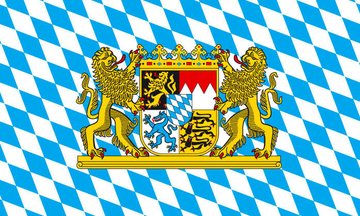
 Bairisch (Boarisch)
1. Ein Dialekt, keine Fremdsprache
Das Bairische (in der eigenen Mundart Boarisch), auch Österreichisch-Bairisch genannt, ist eine Gruppe oberdeutscher Varietäten im Südosten des deutschen Sprachraums: im Freistaat Bayern, im größten Teil Österreichs und in Südtirol (Italien). Es ist der meistgesprochene aller deutschen Dialekte — rund 12 Millionen Sprecher auf etwa 125.000 km² — und bildet ein Kontinuum aus drei Zweigen: Nordbairisch (Oberpfalz), Mittelbairisch (entlang von Isar und Donau, mit München und Wien) und Südbairisch (Tirol, Kärnten, Südtirol).1 Konfidenz: Hoch.
Ist es eine „Sprache“ oder ein „Dialekt“? Beide Etiketten sind vertretbar. Das Bairische hat einen eigenen ISO-639-3-Code (bar) und eine eigene Wikipedia, und die UNESCO führt es seit 2009 als „gefährdet“ (vulnerable) im Atlas der bedrohten Sprachen; der Abstand zwischen Bairisch und Standarddeutsch soll größer sein als der zwischen Dänisch und manchen norwegischen Varietäten. Doch das Bairische hat keinen amtlichen Status, keine einheitliche Rechtschreibung und steht unter dem „Dach“ des Standarddeutschen, das seine Sprecher zum Schreiben und in der Schule verwenden — die meisten Sprecher und Forscher behandeln es daher weiterhin als deutschen Dialekt.12 Für Lernende ist der praktische Punkt derselbe: Wer bereits Standarddeutsch kann, fängt nicht bei null an — man lernt ein systematisches Bündel von Laut-, Grammatik- und Wortschatzverschiebungen. Konfidenz: Hoch.
Dieser Leitfaden ist auf Hochdeutsch verfasst und steigt durch die acht GER-Teilstufen auf, vom Lautsystem (A1.1) bis zum Lesen und Hören bairischer Medien und Lieder (B2.2). Da das Bairische nicht standardisiert ist, weichen Schreibungen zwischen Autoren und Regionen voneinander ab; dieser Leitfaden verwendet weit verbreitete mittelbairische Formen und kennzeichnet Punkte, die variieren.
Das Bairische wird mit dem gewöhnlichen lateinischen Alphabet geschrieben, aber es gibt keinen gemeinsamen orthographischen Standard: Fast alle des Schreibens kundigen Sprecher schreiben stattdessen Standarddeutsch, und Bairisch erscheint vor allem in Gedichten, Liedtexten, regionaler Literatur (z. B. Ludwig Thoma) und im Internet. Verschiedene Autoren schreiben dasselbe Wort unterschiedlich und ergänzen mitunter å, ã oder ö, um Laute festzuhalten, die der standarddeutschen Rechtschreibung fehlen.2 Konfidenz: Hoch.
Die größte erste Hürde ist der Klang, nicht die Schrift. Einige regelmäßige Verschiebungen trennen das Bairische vom Standarddeutschen. Die berühmteste ist das dunkle „å“: Das standarddeutsche a wird oft zu einem o-artigen /ɑ/ gerundet (Standard Tag → Dåg). Aus- und Inlaute werden abgeschwächt oder fallen weg, der Diphthong in nein wird reduziert, und dem standarddeutschen ei entspricht häufig bairisches oa (Stein → Stoa).34 Konfidenz: Hoch für die Grundmuster; die genaue Lautung variiert regional.
| Hochdeutsch | Bairisch | Bedeutung | Was sich verschiebt |
|---|---|---|---|
| Tag | Dåg | Tag | a → dunkles å; auslautendes -g abgeschwächt |
| Stein | Stoa | Stein | ei → oa |
| eins / zwei | oans / zwoa | eins / zwei | ei → oa |
| nein | na | nein | Vokal reduziert |
| Kind | Kind / Kloa(n)s | Kind / Kleines | das Diminutiv auf -l ist allgegenwärtig |
| nicht | ned / net | nicht | -cht → -d/-t |
Der bairische Erkennungsgruß ist Servus (auch Seavus geschrieben) — von lateinisch servus, „dein Diener“ — unter Freunden sowohl für „hallo“ als auch für „auf Wiedersehen“ gebraucht. Griaß di (an eine Person) und das förmlichere/ländliche Griaß God (von Grüß Gott) sind die üblichen Begrüßungen; zum Abschied sagt man Pfiat di (Bfiad di, „behüte dich Gott“) oder wieder Servus.45 Konfidenz: Hoch.
| Bairisch | Hochdeutsch | Bedeutung |
|---|---|---|
| Servus / Griaß di | Hallo / Grüß dich | hallo (informell) |
| Griaß God | Grüß Gott | hallo (höflich/ländlich) |
| Pfiat di / Servus | Tschüss / Auf Wiedersehen | auf Wiedersehen |
| Wia geht's? / Wia geht's eana? | Wie geht's? (du/Sie) | wie geht es dir/Ihnen? |
| Dang schee / Vergeltsgod | Danke schön | danke |
| Ja / Na | Ja / Nein | ja / nein |
| An guadn! | Guten Appetit | guten Appetit |
Die Zahlen eins, zwei, drei — oans, zwoa, drei — sind durch den Oktoberfest-Ruf „Oans, zwoa, gsuffa!“ berühmt. Höhere Zahlwörter variieren deutlich nach Region; die Formen unten sind gängige mittelbairische Gestalten und als Orientierung zu verstehen, nicht als fester Standard (für einen einzelnen Ort prüfungsbedürftig).14 Konfidenz: Hoch für 1–3; Mittel für 4–10 (regionale Variation).
| Zahl | Bairisch | Hochdeutsch |
|---|---|---|
| 1 | oans | eins |
| 2 | zwoa | zwei |
| 3 | drei | drei |
| 4 | viere | vier |
| 5 | fümfe | fünf |
| 6 | sechse | sechs |
| 7 | siem(e) | sieben |
| 8 | åchte | acht |
| 9 | neine | neun |
| 10 | zehne | zehn |
Wo das Standarddeutsche das Diminutiv -chen/-lein liebt, verwendet das Bairische -l (Plural -ln): Mädchen → Madl, Busserl „Küsschen“, Schmankerl „Leckerbissen“. Dieses -l steckt überall in Namen und Speisenwörtern und ist einer der schnellsten Wege, bairisch zu klingen. Einige zentrale Alltagswörter unterscheiden sich außerdem schlicht vom Standarddeutschen: Bua (Junge), Dirndl (Mädchen; auch das Kleid), Semmel (Brötchen), Maß (ein Liter Bier), heid (heute), gscheid (klug/ordentlich). Konfidenz: Hoch für das Muster; Einzelwörter gegen bairische Wörterbücher geprüft.4
Das Standarddeutsche markiert den Kasus (Nominativ, Akkusativ, Dativ, Genitiv) am Artikel und oft am Substantiv. Nord- und Mittelbairisch vereinfachen das stark: Der Kasus wird in der Regel nur am Artikel gezeigt, und Substantive werden mit wenigen Ausnahmen nicht flektiert. Der Genitiv ist in der gesprochenen Sprache praktisch verschwunden — Besitz wird mit dem … sei („dem X sein …“) ausgedrückt, genau wie in der deutschen Umgangssprache. „Der Hund des Mannes“ heißt also nicht des Mannes Hund, sondern am Mo sei Hund. Konfidenz: Hoch.13
Die nützlichste Einzelinformation für Lernende: Das Bairische hat fast kein Präteritum. Die einfache Vergangenheit überlebt nur bei einer Handvoll Verben wie „sein“ (war) und „wollen“; für alles andere wird Vergangenes mit dem Perfekt (haben/sein + Partizip II) ausgedrückt, wie im gesprochenen Süddeutschen insgesamt. „Ich ging“ heißt darum i bin gånga, niemals *i ging. Auch die Präsensendungen verschieben sich — man beachte die charakteristische 2. Person Plural auf -ts (eß måchts, „ihr macht“). Konfidenz: Hoch.13
| Person | Bairisch (måcha „machen“) | Hochdeutsch (machen) |
|---|---|---|
| 1. Sg. (ich) | i måch | ich mache |
| 2. Sg. (du) | du måchst | du machst |
| 3. Sg. (er/sie) | er måcht | er macht |
| 1. Pl. (wir) | mia måchan | wir machen |
| 2. Pl. (ihr) | eß måchts | ihr macht |
| 3. Pl. (sie) | se måchan(t) | sie machen |
Das Bairische bewahrt ein altes Pronomen der 2. Person Plural, das dem Standarddeutschen verloren ging: eß / öß „ihr“, mit Dativ/Akkusativ enk „euch“. Beide stammen aus einem germanischen Dual und überraschen selbst geübte Hochdeutsch-Sprecher. Weitere hochfrequente Pronomen: i „ich“, du „du“, mia „wir“, se „sie“; der Dativ „mir / dir“ lautet mia / dia. Konfidenz: Hoch.3
Jenseits der Lautverschiebungen besitzt das Bairische einen Wortbestand ohne durchsichtige standarddeutsche Entsprechung, vieles rund um Essen, Wetter, Trinken und Gemütslage: Schmankerl (Leckerbissen), Brotzeit (kalte Zwischenmahlzeit), Watschn (Ohrfeige), Hatscher (mühsam langer Fußmarsch), grantig (mürrisch), zwider (widerborstig/unleidlich), Wiesn (die Oktoberfest-Wiese), Habedere (höflicher Gruß, von „habe die Ehre“). Solche Wörter sammelt man am besten aus echtem Input, statt sie isoliert auswendig zu lernen. Konfidenz: Mittel–Hoch; Einzelglossen gegen ein bairisches Wörterbuch prüfen.4
Weil Bairisch kaum als Schriftsprache unterrichtet wird, ist der reichste Input gesprochen und gesungen: die Austropop-Welle der 1970er/80er, moderne bairische/österreichische Bands, Regionalradio und -fernsehen, dazu verständliche schriftliche Quellen wie die Boarische Wikipedia und die Dialektprosa von Autoren wie Ludwig Thoma. Ziel: den Sinn eines Liedes oder kurzen Dialekttextes erfassen und dann mit dem Standarddeutschen abgleichen. Es gibt sogar eine vollständige Bibelübersetzung ins Bairische. Konfidenz: Hoch.25
Grammatikkontraste auf einen Blick
| Merkmal | Hochdeutsch | Bairisch |
|---|---|---|
| Vergangenheit | Präteritum + Perfekt beide üblich | nur Perfekt (Präteritum ≈ nur „sein“, „wollen“) |
| Kasusmarkierung | Artikel + Substantiv (+ Adjektiv) | hauptsächlich am Artikel; Substantive kaum flektiert |
| Genitiv | des Mannes Hund | ersetzt durch „am Mo sei Hund“ |
| 2. Person Plural | ihr / euch | eß / öß und enk |
| Diminutiv | -chen / -lein (Mädchen) | -l (Madl, Busserl) |
| „ei“-Wörter | ein, Stein, Fleisch | oa: oans, Stoa, Floas |
Typische Fehler (für Hochdeutsch-Sprecher)
- Das Präteritum verwenden: *i machte statt des natürlichen Perfekts i hob gmacht. Im Bairischen gilt: Vergangenheit = Perfekt.
- Nach ihr/euch greifen: Die bairische 2. Person Plural lautet eß/öß und enk, nicht ihr/euch.
- Kasus am Substantiv übermarkieren: Das Bairische zeigt den Kasus am Artikel — keine standarddeutschen Substantiv-/Genitivendungen erzwingen.
- Überall das standarddeutsche a sprechen: Viele a sind das dunkle, gerundete å (Tag → Dåg, Wasser → Wåsser).
- Die Schreibung für fest halten: Es gibt keine amtliche Orthographie — dasselbe Wort kann mehrfach verschieden geschrieben sein. Nach dem Klang lesen, nicht nach der Schreibung.
Kultureller Kontext
Das Bairische trägt eine starke regionale Identität. Rund 45 % der Bayern gaben (2008) an, im Alltag ausschließlich Dialekt zu sprechen, und die Wahl zwischen Servus, Griaß di und dem frommeren Griaß God signalisiert Register, Region und Nähe. Der Dialekt durchzieht Bierhallenkultur, Oktoberfest, Volksmusik und Fußball — der FC Bayern München hat sogar eine bairischsprachige Version seiner offiziellen Website angeboten. Ein wenig Boarisch zu sprechen wird weniger als „falsches Deutsch“ gelesen denn als freundliche Geste lokaler Zugehörigkeit.15 Konfidenz: Hoch.
Geprüfte Ressourcen
- Omniglot — Bavarian language, alphabet & pronunciation (Englisch)A1–A2 — Überblick über Laute, Schreibung und Dialektgruppen
- Omniglot — Useful phrases in Bavarian (Englisch)A1–B1 — Grüße, Höflichkeitsformeln und Alltagsphrasen
- Wikipedia (deutsch) — Bairische DialekteAlle Stufen — Klassifikation, Lautlehre, Grammatiktabellen, Status
- Boarische Wikipedia (bairische Wikipedia)B1–B2 — verständlicher schriftlicher Input auf Bairisch
- Historisches Lexikon Bayerns — DialekteB1–B2 — wissenschaftlicher Überblick (Bayerische Akademie der Wissenschaften)
Quellen & Zitate
Notes & Bibliography
- „Bavarian language“, Wikipedia (englisch) — Österreichisch-Bairisch als meistgesprochener oberdeutscher Dialekt (~12 Mio. Sprecher, ~125.000 km²), die Zweige Nord/Mittel/Süd, Perfekt statt Präteritum, Kasus nur am Artikel, ~45 % reine Dialektverwendung im Alltag (2008). [source] ↩
- „Bavarian language“, Wikipedia (englisch) — zur Dialekt-oder-Sprache-Debatte: ISO-639-3-Code „bar“, die Boarische Wikipedia, UNESCO-Einstufung „vulnerable“ (2009), Fehlen eines gemeinsamen orthographischen Standards, bairische Bibelübersetzung. [source] ↩
- „Bavarian language“, Wikipedia (englisch), Grammatikteil — Seltenheit des Präteritums, Endungen der 2. Person Plural auf -ts, die Pronomen eß/öß und enk, das måcha-Paradigma und die Pronomentabellen. [source] ↩
- „Bavarian language, alphabet and pronunciation“ und „Useful phrases in Bavarian“, Omniglot — Laut-/Schreibungsüberblick, Grüße (Servus, Griaß di, Griaß God, Pfiat di) und Alltagswortschatz. [source] ↩
- „Bavarian language“, Wikipedia (englisch) — kultureller Kontext: Austropop, Ludwig Thomas Dialektprosa, Regionalmedien, die bairischsprachige Website des FC Bayern München; Grußregister nach Omniglots bairischer Phrasenliste. [source] ↩